Stop debating.
Start coaching.
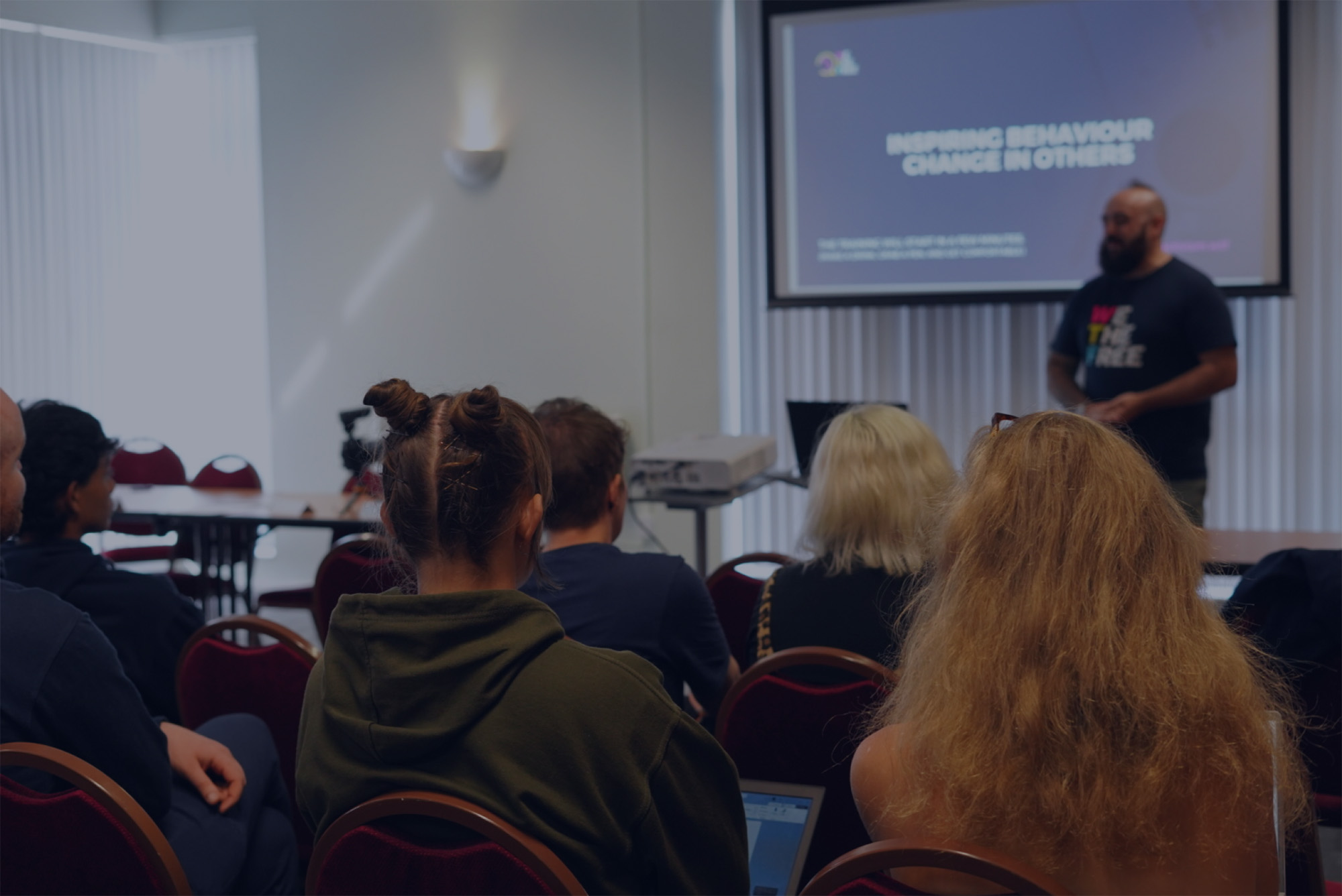
Inspiring Behaviour Change is the method behind every WTF outreach conversation. Learn it in a free live workshop.
What IBC is
Inspiring Behaviour Change (IBC) is We The Free's evidence-informed approach to outreach conversations. It rests on a simple idea: people are far more likely to change when they reach their own conclusions than when someone argues them into one.
The goal is a conversation where people feel safe enough to think honestly about what they believe, spot the inconsistencies for themselves, and explore what a different choice could look like. Nobody gets ambushed or pressured, and the decision stays theirs the whole way through. That freedom matters, because when people feel pushed, they dig in.
IBC goes further than a list of good questions. It brings together three core principles, a conversation framework, specific questioning techniques, active listening, and ways to respond to objections without getting combative. That gives you a process you can rely on, whether you've got three minutes with someone or thirty.
We want people to walk away still thinking about it, with nothing to defend. That's why it works for first-time outreachers looking for confidence, experienced activists who want better conversations, and anyone who wants to talk about hard topics without it turning into a fight.
Why it works
Why coach instead of debate
Debates backfire
In a debate somebody has to lose, and nobody wants to be the loser. Studies show two people who debate opposing views usually leave more convinced of where they started. Being nice about it doesn't change that.
People believe what they say
A conclusion someone reaches out loud, in their own words, is one they own. That's why the whole method is questions.
Most people already agree with you
Almost everyone you meet says they love animals and hate seeing them suffer. You don't need to change their values. Their actions just haven't caught up yet.
You stop needing an answer to everything
When you're asking the questions, a clever objection isn't a test you can fail. Activists tell us they stop dreading the next conversation.
How it works
Clarity = Awareness + Accountability + Action
The questions take a person through three steps, and they do the talking at each one. Most people we meet are missing one or two.
Awareness
They know what happens to animals. Most people never see it, and the packaging suggests something humane happens along the way.
Accountability
They see that it happens because people pay for it, and that includes them. It isn't only the farmers' problem, or the government's.
Action
They know what to do next and believe they can. They name the hard part themselves, and how they'd get past it.


A complete game changer for my outreach conversations. I used to head into events geared up for a confrontation, but now I feel much more relaxed and I have more effective conversations.
Two levels
Foundations and Masterclass
Both run live on Zoom, and you'll practise as much as you listen. If you've already taken one, its handout is here to reread before your next event.
Foundations
The Vegan Outreach Crash Course. Three principles, nine questions and three ways to handle an objection, which is about as much as anyone can remember mid-conversation. Start here.
Read the Foundations handoutMasterclass
The Vegan Outreach Masterclass. The full method, with 15 questions, a 7-step framework for objections, two worked role plays and six playbooks for the objections you hear most.
Read the Masterclass handoutJoin an upcoming workshop
Now also taught in Spanish.
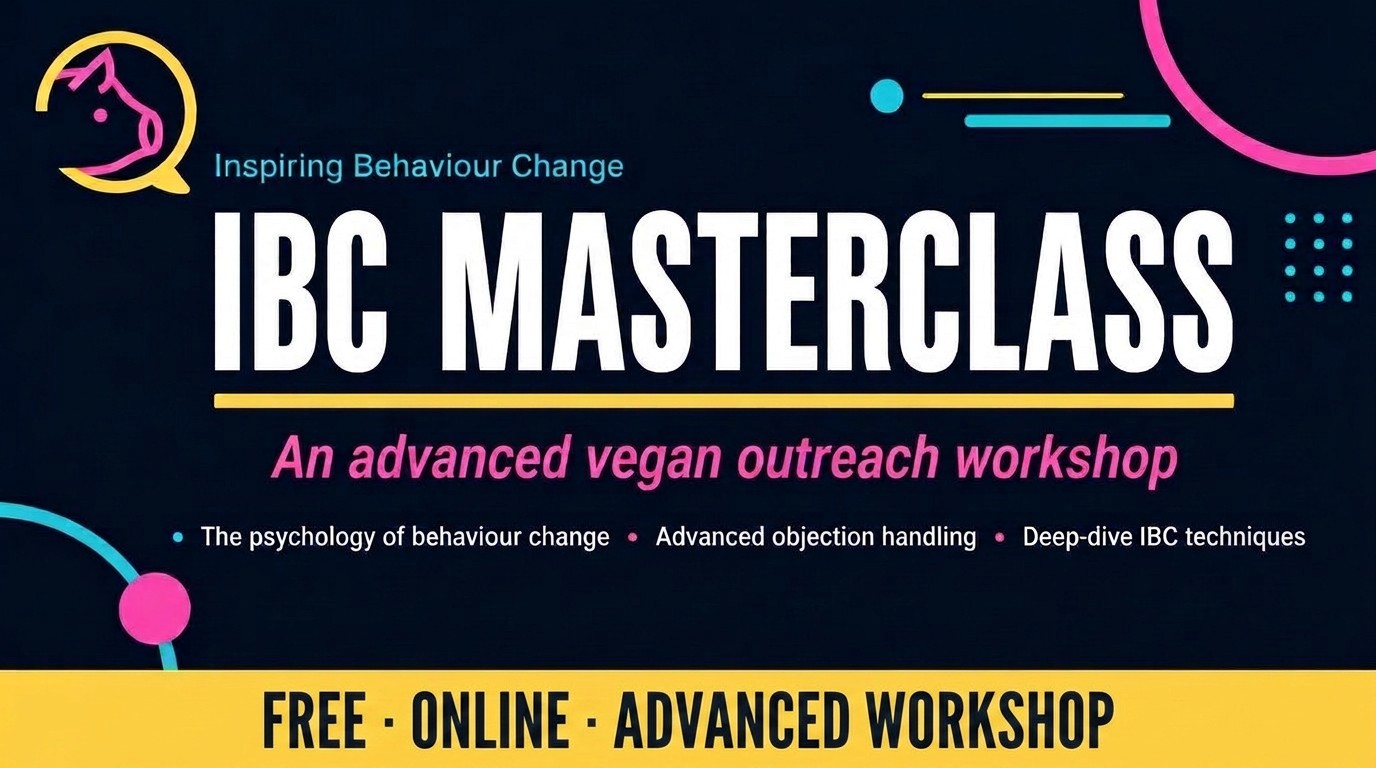
Vegan Outreach Masterclass
Vegan Outreach Masterclass
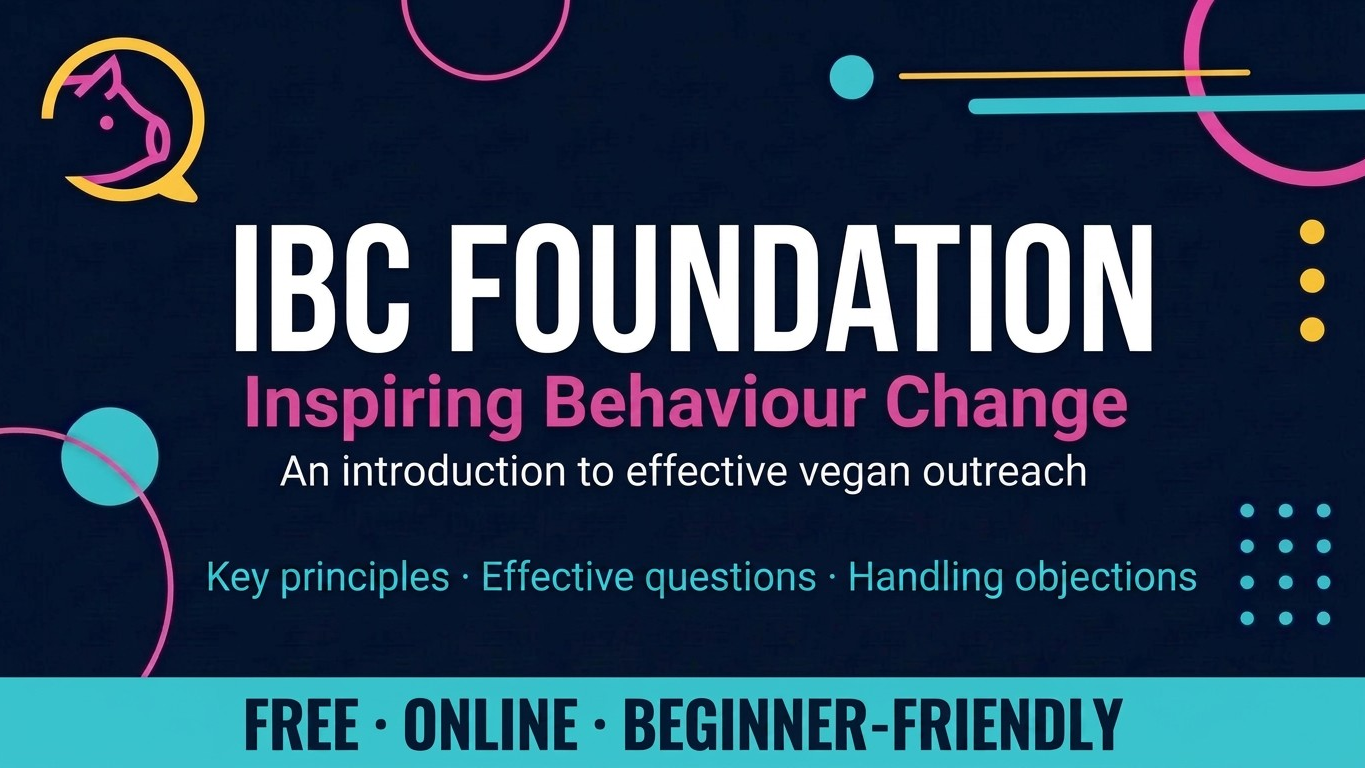
Vegan Outreach Crash Course
Vegan Outreach Crash Course
Vegan Outreach Crash Course
Vegan Outreach Crash Course
Questions
No. Every workshop is free. We want every advocate to be equipped and empowered to have effective conversations about veganism.
No. It helps to have had a few conversations of your own, because you'll recognise the moments where they went wrong. If you haven't done any outreach yet, start with Foundations.
We built it for street outreach and that's where we practise it. The questions work just as well at the dinner table, in a video chat, or with a colleague who asks why you're vegan.
No. Anyone who advocates for animals can join, whichever group they're active with.
Try it at your next event
One session is enough to start asking different questions.